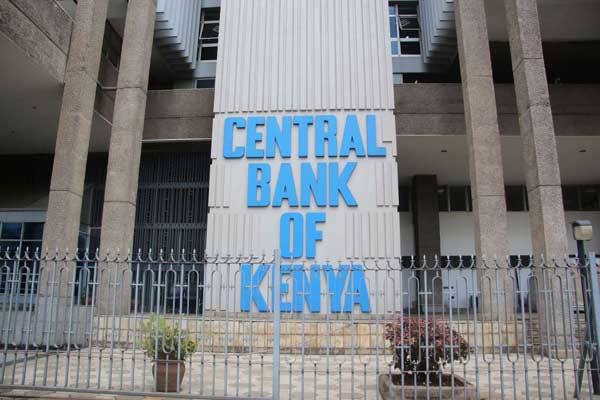
Kenya’s commercial banking sector has pushed its total core capital past the Sh1 trillion mark, rising from Sh989.2 billion in December 2024 to Sh1.059 trillion in September 2025, according to released financial data.
The growth signals strengthening balance sheets across major lenders, but the sector still faces significant disparities as 11 banks remain below the Central Bank of Kenya’s (CBK) minimum Sh3 billion threshold required by December 31, 2025
The data released on Monday shows that while the top-tier banks have posted strong capital growth, several smaller institutions continue to struggle, with some recording negative capital positions.
KCB Bank Kenya’s core capital increased from Sh144.7 billion to Sh161.6 billion, while Equity Bank rose from Sh132.3 billion to Sh145.5 billion.
Co-operative Bank, NCBA Bank, Absa Bank Kenya, Stanbic Bank, Standard Chartered, and Diamond Trust Bank all remained comfortably above the CBK requirement.
The new data also highlights solid performances from several mid-tier lenders, including Family Bank, Victoria Commercial Bank, Guaranty Trust Bank, Gulf African Bank, SBM Bank, and Sidian Bank, all above the 3 billion mark, well ahead of the deadline.
However, the 11 banks remaining below the Central Bank of Kenya’s Sh3 billion minimum raises concerns about their ability to comply before the year-end cut-off.
These include ABC Bank, CIB Bank, M-Oriental Bank, Premier Bank, Middle East Bank, Development Bank, UBA Kenya, Credit Bank, Access Bank, Consolidated Bank, and Spire Bank.
Some institutions have slipped into negative capital territory, with the data showing –Sh766 million for Access Bank and –Sh668 million for Consolidated Bank, signalling deep solvency pressures that may require urgent intervention.
The CBK has set a progressive capital roadmap that increases the minimum requirement to Sh5 billion in 2026, Sh6 billion in 2027, Sh8 billion in 2028, and Sh10 billion by 2029.
Financial analysts say the CBK’s stance reflects a broader push to restore discipline within the financial sector, tighten supervisory controls and reinforce the accountability of both commercial lenders and government entities.
With inflationary pressures still elevated and credit conditions tightening, the Bank’s actions are expected to shape borrowing costs, liquidity flows and consumer sentiment in the coming months.
For Kenyans, the regulator’s posture offers a measure of certainty in an otherwise volatile economic landscape. However, the impact of CBK decisions will ripple across households, SMEs and corporates that depend on predictable credit conditions.
The effectiveness of these interventions will hinge on how swiftly lenders align with regulatory expectations and how firmly the CBK sustains its oversight.
As policy adjustments continue, all eyes now remain on the Monetary Policy Committee and the broader regulatory framework that will determine the trajectory of interest rates, banking-sector stability and market confidence.
The months ahead will reveal whether the Central Bank’s tightened measures will anchor economic resilience or intensify the pressure on borrowers and financial institutions navigating a challenging economic cycle.































Comments
Sign in with Google to comment, reply, and like comments.
Continue with Google